🔄 Last reviewed 9 October 2026 by the editorial desk • how we research • independent and affiliate-funded
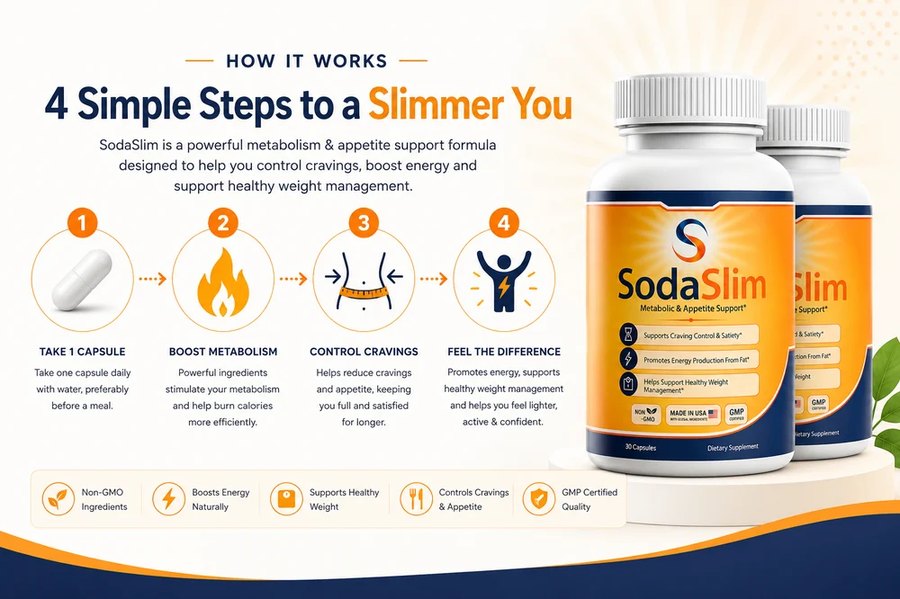
SodaSlim® works on two fronts rather than one. Chromium picolinate, green tea extract and alpha lipoic acid sit on the metabolic side, in the pathways that handle glucose and convert food into usable energy. Glucomannan, garcinia cambogia and the B vitamins sit on the appetite-and-fullness side, with glucomannan providing the only straightforwardly physical mechanism in the formula: a soluble fibre that absorbs water and swells. Every measured weight difference we could verify against placebo is under 1.1 kg, and the agencies that published those numbers qualified them heavily. ⚙️
Two mechanisms, not one 🔁
Most products in this category tell a single story — usually about thermogenesis — and repeat it loudly. SodaSlim® is built differently, and the two-sided structure is the most interesting thing about the formula. 🧪
Mechanism one is metabolic support. Three ingredients sit in the biochemistry of fuel handling: chromium in glucose metabolism, green tea catechins in energy expenditure and fat oxidation pathways, alpha lipoic acid in the mitochondrial reactions that turn food into usable energy. The ambition here is to nudge how the body processes what you eat. 🔥
Mechanism two is appetite and fullness. Glucomannan absorbs water in the stomach and swells, which is a bulk-and-volume effect rather than a chemical one. Garcinia's hydroxycitric acid has been studied for appetite and for fat synthesis. The B vitamins support the release of energy from food, which is about how you feel while eating less rather than about eating less. 🥗
Why it matters that there are two: a formula with two unrelated routes has two chances of doing something for you and two sets of safety considerations to read. It also means that if you notice anything at all, you will not know which half did it. 🤔
The metabolic side 🔥
Chromium picolinate 🩸
Chromium is an essential trace mineral, which means your body genuinely needs some. The NIH chromium fact sheet puts the adult Adequate Intake at 35 mcg a day for men and 25 mcg a day for women aged 19 to 50, falling to 30 and 20 mcg from 51. Most people meeting those figures from food are not deficient.
On weight, the picture is consistent and modest. the NIH weight-loss supplements fact sheet reports a 2013 Cochrane review in which chromium picolinate produced about 1.1 kg more weight loss than placebo — and the review authors themselves described that as of “debatable clinical relevance”. A 2019 meta-analysis cited by the chromium fact sheet found about 0.75 kg, which the NIH calls of “little clinical significance”. On blood sugar, the American Diabetes Association considers the evidence insufficient to support routine chromium use for glycaemic control, and chromium does not appear to moderate glucose in healthy people. ⚖️
Green tea extract and EGCG 🍃
The most studied ingredient in the formula. the NIH weight-loss supplements fact sheet reports roughly 0.95 kg more weight loss than placebo from a 2012 Cochrane review — and immediately qualifies it: the non-Japanese trials showed no significant difference, and the European Food Safety Authority concluded in 2010 that a cause-and-effect relationship between green tea catechins and weight maintenance was not established. 🧪
It is also the ingredient whose safety matters most, and we cover that in full on the ingredients page. In short: NCCIH's green tea page notes that liver injury from green tea is uncommon but reported, mainly with extracts in tablet or capsule form rather than with brewed tea, and that an immune-gene variant carried by 5 to 15 per cent of Americans appears to raise susceptibility. What EGCG actually does goes deeper. 🍃
Alpha lipoic acid 🔁
Here we have to do something unusual for a page like this and tell you that we have nothing to report. Alpha lipoic acid is an antioxidant the body makes itself, and it is involved in the mitochondrial reactions that convert food into usable energy — that much is textbook biochemistry. But it does not appear in the NIH weight-loss fact sheet at all, and it has no NIH fact sheet of its own. 🤐
So rather than borrow a number from somewhere less reliable, we will say the honest thing: there is no agency-grade weight figure for alpha lipoic acid for us to quote, so we quote none. You can read the primary literature yourself on PubMed or the Cochrane Library, and our plain guide to ALA explains what is and is not established. ✅
The appetite side 🥗
Glucomannan 🌾
Mechanically, this is the most straightforward ingredient in the capsule. Glucomannan is a soluble fibre from konjac root that absorbs water and swells, adding bulk and viscosity in the stomach. There is nothing speculative about the physics. 💧
The trial record is a different matter. the NIH weight-loss supplements fact sheet reports a 2015 systematic review of six trials that found no significant effect on body weight at doses up to 3.99 g a day over 12 weeks. A real mechanism and a null result are not a contradiction — they simply mean the mechanism does not reliably translate into pounds on a scale. Where glucomannan may still earn its place is in how a meal feels, which is not nothing if your difficulty is portion size. 🍽️
The safety note belongs here too, because it is usually told wrongly. Oesophageal obstruction has been associated with tablet forms of glucomannan; powder and capsule forms have not been linked to it. SodaSlim® is a capsule. Take it with a full glass of water anyway, and see why the water matters. 💧
Garcinia cambogia and HCA 🍋
Garcinia supplies hydroxycitric acid. the NIH weight-loss supplements fact sheet reports a 2011 meta-analysis in which garcinia produced about 0.88 kg more short-term weight loss than placebo — and that the difference was not significant when only the two most rigorous trials were counted. That is the sort of qualification that separates an evidence base from a marketing line. 🧪
It also carries the clearest safety signal in the formula, which we set out in detail on the ingredients page: LiverTox assigns garcinia a likelihood score of B — a likely rare cause of clinically apparent liver injury. Read that section before you buy, not after. ⚠️
Vitamin B complex ⚡
B vitamins are required to release energy from food. That is real, and it is also the sentence most often stretched past breaking point in supplement copy, because being required for energy release is not the same as supplying energy. The NIH vitamin B12 fact sheet is blunt about it: B12 supplementation “does not appear to improve athletic performance or endurance in people who have sufficient vitamin B12 status”. 🧮
If you are low in a B vitamin, correcting that can make a genuine difference to how you feel. If you are not, extra does not add headroom. We unpack the energy claim here. ⚡
What each one is evidenced to do 📊
One table, six ingredients, no adjectives. Every figure below came from the agency pages linked at the foot of this page, and we have deliberately included the qualifications the agencies attached to them. 📋
| Ingredient | Side of the formula | Best verifiable figure | How the agencies qualify it |
|---|---|---|---|
| Chromium picolinate | Metabolic | ~1.1 kg against placebo (2013 Cochrane); ~0.75 kg (2019 meta-analysis) | NIH calls the effect of “debatable clinical relevance” and of “little clinical significance” |
| Green tea extract (EGCG) | Metabolic | ~0.95 kg against placebo (2012 Cochrane) | Non-Japanese trials showed no significant difference; EFSA found cause-and-effect not established |
| Alpha lipoic acid | Metabolic | Not covered by the NIH weight-loss fact sheet at all | No agency-grade figure exists for us to quote, so we quote none |
| Glucomannan | Appetite | No significant effect on body weight across six trials (2015 systematic review) | Up to 3.99 g a day over 12 weeks; the physical mechanism is real, the weight result is not |
| Garcinia cambogia (HCA) | Appetite | 0.88 kg short term (2011 meta-analysis) | Not significant once only the two most rigorous trials were counted |
| Vitamin B complex | Energy from food | Required to release energy from food, not a source of energy | NIH: supplementation does not appear to improve performance in people with sufficient status |
🧭 Figures are differences against placebo in pooled analyses, not promises. Because no amount is published for any ingredient in this capsule, none of these studies can be matched to this product.
The honest shape of the evidence 🧪
Lay the six side by side and a pattern appears that no sales page will draw for you. 📉
- Every verifiable weight difference is small. The largest figure in the whole table is 1.1 kg, and the agency that published it called its clinical relevance debatable. Small differences are not meaningless — but they are small, and they should be priced that way.
- Two ingredients failed their most rigorous tests. Green tea lost significance outside Japanese trials; garcinia lost it when only the two best trials were counted. That is the normal shape of a thin evidence base.
- One has a real mechanism and a null result. Glucomannan swells. It did not move the scale across six trials.
- One has no agency fact sheet at all. Alpha lipoic acid, and we would rather say so than fill the gap.
- One is necessary rather than beneficial. B vitamins, where more does nothing for people who already have enough.
- Two mechanisms: fuel handling and appetite or fullness. 🔁
- Glucomannan is the only plainly physical mechanism in the capsule. 🌾
- Every verifiable weight difference against placebo is under 1.1 kg. 📉
- Alpha lipoic acid has no NIH fact sheet, so we quote no figure for it. 🤐
- No amount is published, so no study can be matched to this bottle. 🔍
What to expect, and when 📅
Nothing in this formula acts fast, and anyone telling you otherwise is selling. A reasonable way to think about the first two months: ⏳
- 📆 Week one to two. The only things you can honestly assess are tolerance and routine — whether the capsule suits your stomach, and whether you remember to take it before the right meal.
- 🍽️ Week two to four. If the fibre mechanism does anything for you, the feel of a meal is where it would show. Portion size is the thing to watch, not the scale.
- 📈 Week four to eight. The window in which a small, slow difference could begin to be visible in the context of whatever else you are doing. Weigh weekly at most, same time of day. Realistic timelines here.
- 🛡️ Day 60. The guarantee runs out, counted from the date of purchase. Diarise a decision date well before it.
And the unglamorous frame around all of it: NIDDK and MedlinePlus agree that healthy eating and regular physical activity are the basis of losing weight and keeping it off. A capsule is a possible addition to that. It is not an alternative to it, and no product in this category has ever been. 🥗
What a mechanism story cannot tell you ⛔
Everything above is about how these ingredients are thought to act. Four things it cannot settle: 🤐
- Dose. No amount is published for any of the six, so a mechanism that works at 3 g tells you nothing about a capsule that may contain 30 mg. This is the single biggest limit on the whole page.
- Interaction. Six ingredients in one capsule have not been tested together as a finished formula, so the two mechanisms are an argument from parts, not a measured result.
- You. Pooled averages describe groups. Nobody in a trial is the average, and neither are you.
- Everything else. Sleep, protein, walking and stress all move appetite and weight, and all of them were moving while you took the capsule. What metabolism really is is a useful corrective here.
That is the whole mechanism story, as straight as we can tell it. The next useful step is the ingredient-by-ingredient breakdown, which carries the safety signals in full. 🌿